
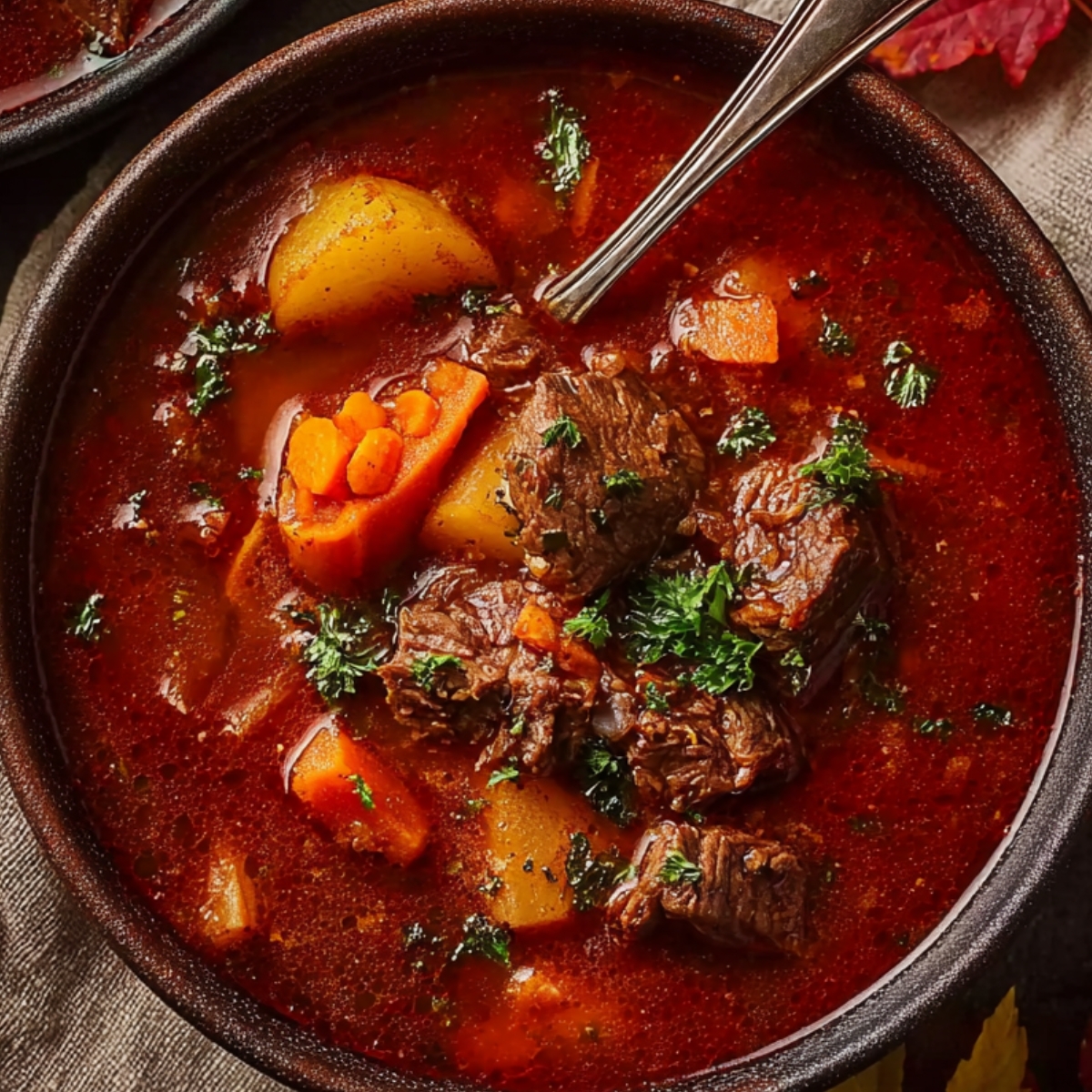
This Hungarian goulash recipe brings together tender beef, sweet paprika, and vegetables in a deeply savory broth that fills the kitchen with the kind of warmth you can almost taste. I first tried authentic goulash at a tiny restaurant in Budapest years ago, and I've been chasing that rich, comforting flavor ever since. The best part? It's surprisingly simple to make at home with ingredients you probably already have.
If you love hearty, soul-warming dishes, you'll also want to try this French Onion Soup Recipe or these Sausage Stuffed Shells for cozy family dinners.
Why You Will love this Hungarian Goulash Recipe
This classic Hungarian goulash recipe is everything you want in a cold-weather meal. The beef becomes so tender it falls apart at the touch of a spoon, and the broth is rich with layers of flavor from the paprika, garlic, and slow-cooked vegetables. It's a one-pot wonder that feeds a crowd without much active cooking time.
You'll love how the carrots and potatoes soak up all that gorgeous red broth, and how the bell peppers add little pops of sweetness. It's hearty enough to satisfy the hungriest family members but won't leave you feeling overly full. Plus, it reheats beautifully, which means leftovers for lunch or an easy dinner later in the week.
This is the kind of recipe that makes you feel like a really good cook, even though it's mostly just chopping vegetables and letting the oven do the work.
Jump to:
Hungarian Goulash Recipe Ingredients
Here's what you'll need to make this Hungarian goulash recipe from scratch.
See Recipe Card Below This Post For Ingredient Quantities
- Beef chuck: This cut becomes incredibly tender during slow cooking and has enough fat to keep the meat moist and flavorful. Cut it into generous cubes so each piece stays juicy.
- Cooking salt and black pepper: Season the beef before browning to build flavor from the start.
- Extra virgin olive oil: Helps brown the onions and prevents sticking.
- Unsalted butter: Adds richness to the base and helps the onions caramelize beautifully.
- Brown onions: The backbone of the dish. They break down during cooking and naturally thicken the broth while adding sweetness.
- Garlic cloves: Brings a warm, savory depth that complements the paprika perfectly.
- Capsicum (bell peppers): Use one red and one yellow for color and a subtle sweetness that balances the richness of the beef.
- Tomatoes: They break down into the broth, adding acidity and body. Fresh tomatoes work best here.
- Hungarian-style paprika: This is the star of the show. Hungarian paprika is sweeter and more complex than regular paprika, giving the goulash its signature flavor and deep red color.
- Caraway seeds: Optional but traditional. They add a subtle earthy, slightly licorice-like note that's very Central European.
- Bay leaf: Infuses the broth with a gentle herbal background note.
- Low-sodium beef stock: Forms the base of the broth. Using low-sodium gives you better control over the saltiness.
- Carrots: Add sweetness and color, plus they soak up all that delicious broth.
- Potatoes: Make the dish more filling and help thicken the broth slightly as they cook. They turn wonderfully tender and flavorful.
- Parsley: A fresh, bright garnish that adds a pop of color and a hint of freshness.
HOW TO MAKE Hungarian Goulash Recipe
Follow these steps to make the most comforting slow cooked Hungarian goulash recipe you've ever tasted.
Preheat oven: Set your oven to 180°C / 350°F (160°C fan) so it's ready when you need it.
Season beef: Toss the beef cubes with half of the salt and pepper in a bowl. This seasons the meat all the way through.
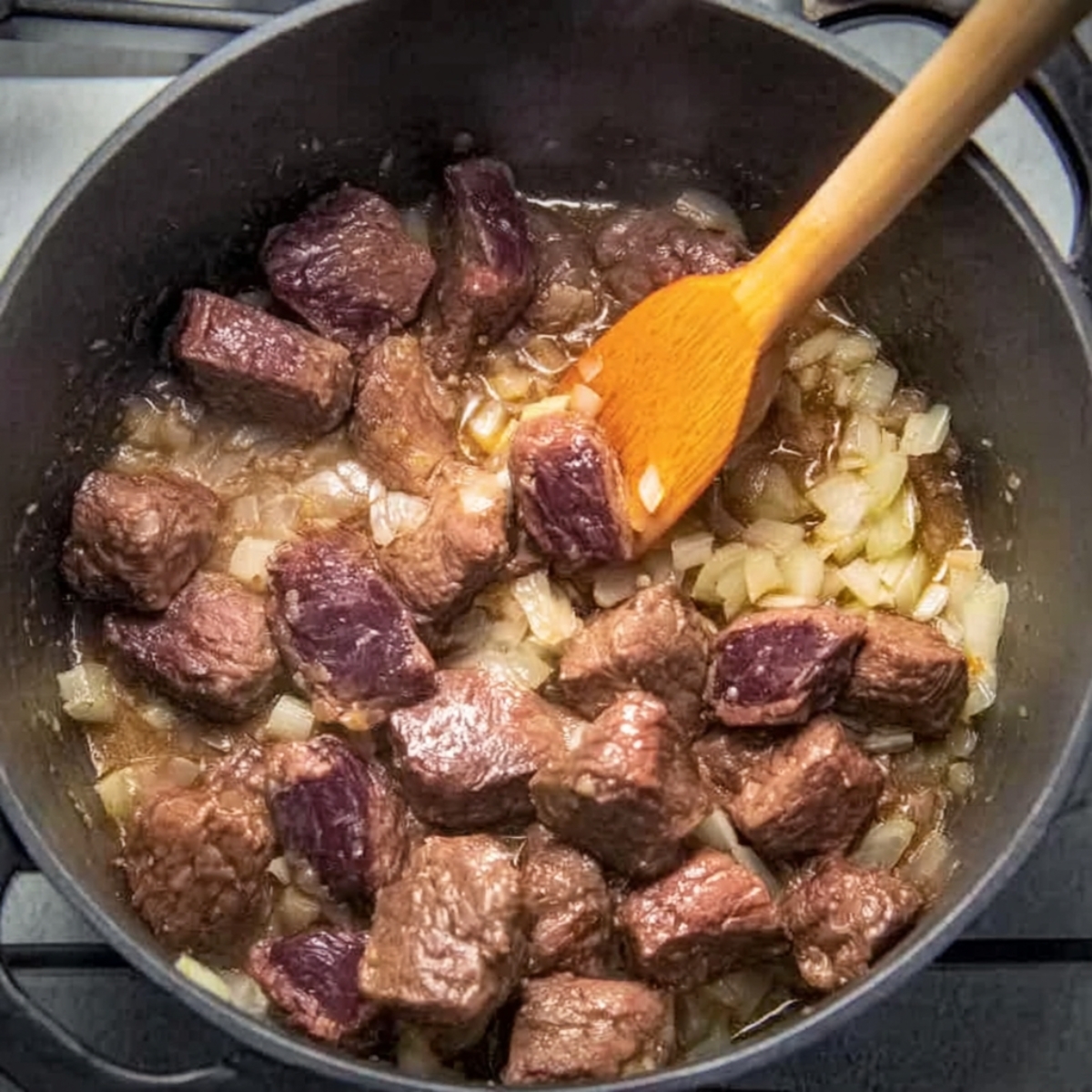
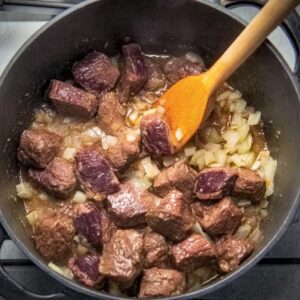
Cook onions: Heat the olive oil and melt the butter together in your Dutch oven over high heat. Add the onions and cook for about 6 minutes, stirring occasionally, until the edges turn lightly golden and smell sweet.
Cook beef: Add the seasoned beef to the pot and stir for around 2 minutes. You want the outside to change from red to brown, but don't worry about getting a deep sear. This is a gentler approach than typical stews.
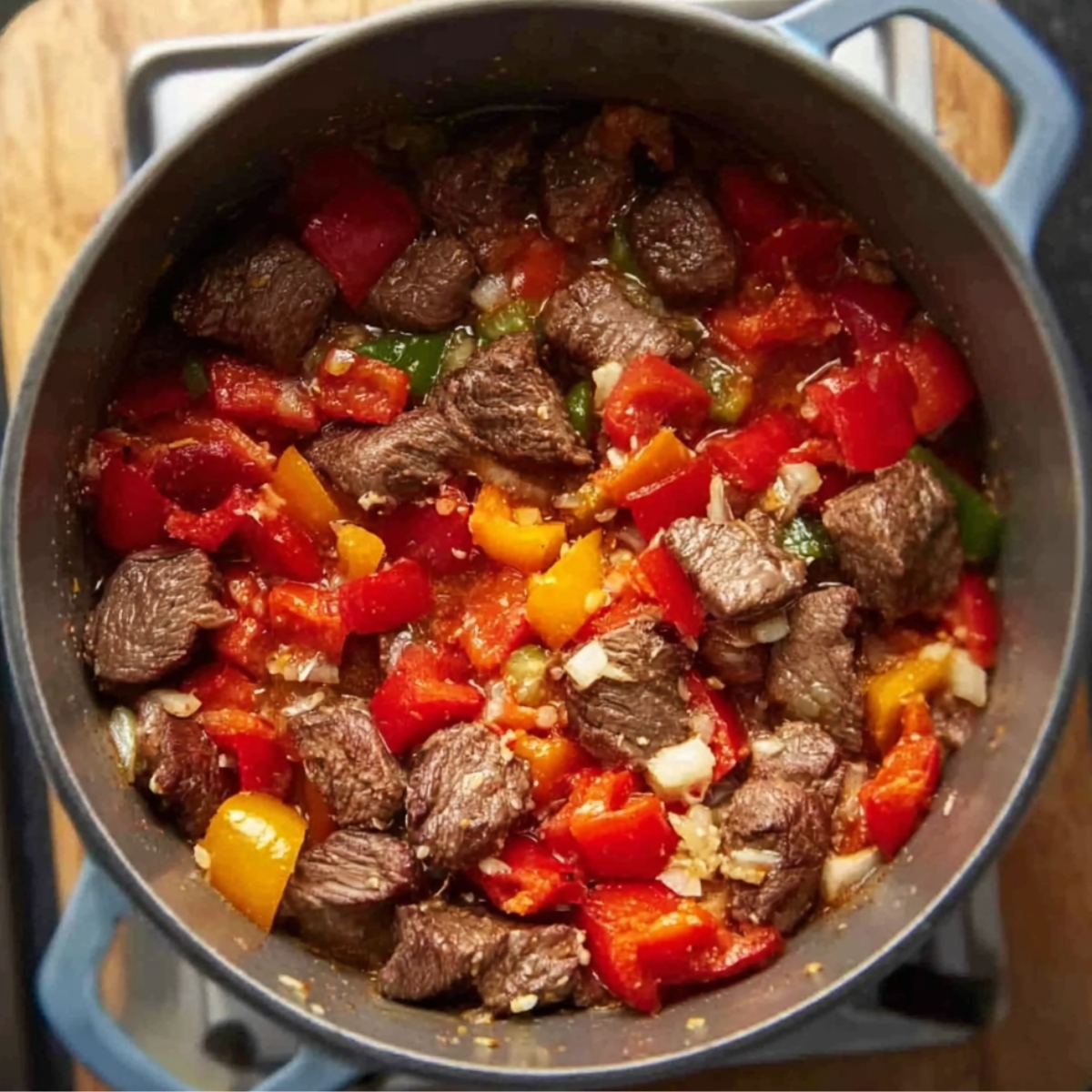
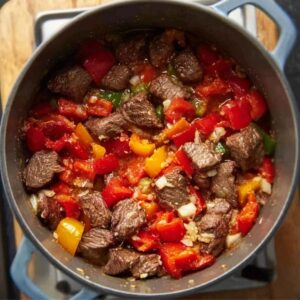
Add vegetables: Stir in the garlic, bell peppers, and tomato wedges. Cook for 3 minutes, stirring often, until the tomatoes start to break down and release their juices.
Add spices: Sprinkle in the paprika, caraway seeds if using, and tuck in the bay leaf. Stir everything together for just 30 seconds so the paprika becomes fragrant but doesn't burn.
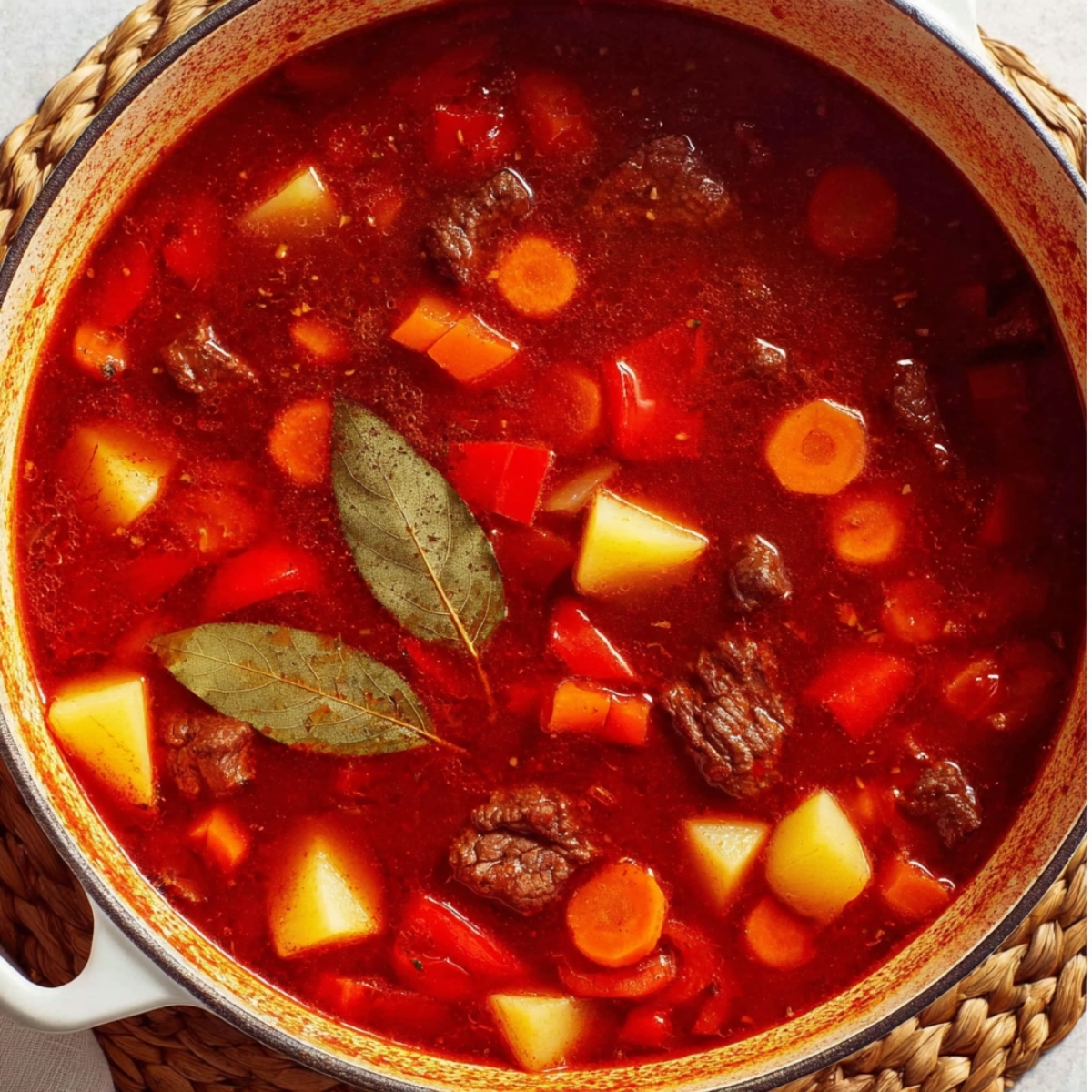
Slow cook: Pour in the beef stock and stir to combine everything. Bring it to a gentle simmer, then cover the pot with the lid and slide it into your preheated oven. Let it cook undisturbed for 1 ½ hours.
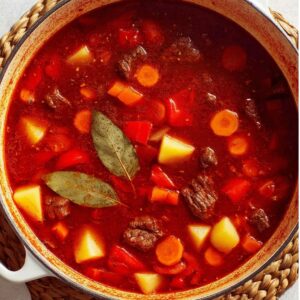
Add vegetables: Carefully remove the pot from the oven and stir in the carrots and potatoes. Cover again and return to the oven for another 30 minutes. Check if the beef is fall-apart tender. If it still feels a bit firm, give it another 10 minutes.
Serve: Ladle the goulash into deep bowls, sprinkle with fresh parsley if you like, and serve it steaming hot with crusty bread on the side for dunking into that gorgeous broth.
Substitutions and Variations
This traditional Hungarian Goulash Recipe is pretty flexible if you need to make swaps.
Beef alternatives: If you can't find beef chuck, use beef stew meat or even short ribs cut into chunks. Lamb shoulder also works beautifully for a different but equally delicious version.
Paprika: Hungarian paprika is ideal, but if you only have regular sweet paprika, use it and add a pinch of smoked paprika for depth. Avoid hot paprika unless you like serious heat.
Bell peppers: Any color works fine. Green peppers will give you a slightly more bitter, traditional taste, while red, yellow, or orange keep things sweeter.
Potatoes: Swap them for parsnips or turnips if you want something different, or leave them out entirely and serve the goulash over egg noodles or mashed potatoes instead.
Caraway seeds: If you're not a fan, just skip them. The goulash will still be delicious.
Vegetarian version: Replace the beef with large chunks of mushrooms (portobello or cremini work great) and use vegetable stock. You'll lose the meaty richness but gain a wonderful earthy flavor.
Expert Tips
Use real Hungarian goulash recipe. It makes an enormous difference. The flavor is sweeter, more complex, and gives you that authentic taste. Look for it in specialty stores or online.
Don't rush the browning. Even though you're not deeply searing the beef, giving the onions time to caramelize properly builds the flavor foundation for the entire dish.
Low and slow wins. The long, gentle cooking time in the oven is what makes the beef melt-in-your-mouth tender. Don't be tempted to crank up the heat.
Taste and adjust. Every batch of paprika is slightly different, and your tomatoes might be more or less acidic. Taste the broth before serving and add a pinch more salt or a tiny splash of vinegar if needed.
Equipment FOR Hungarian Goulash Recipe
- Large oven-proof Dutch oven with lid: Essential for this recipe. The heavy pot distributes heat evenly and goes from stovetop to oven seamlessly.
- Cutting board: For prepping all your vegetables and beef.
- Chef's knife: A good sharp knife makes chopping the onions, peppers, and beef much easier.
- Measuring cups and spoons: For accurate amounts of paprika, stock, and seasonings.
- Wooden spoon or heat-safe spatula: For stirring without scratching your Dutch oven.
Storage and Reheating Tips
This one pot Hungarian Goulash Recipe stores beautifully and often tastes even better the next day.
Refrigerator: Let the goulash cool completely, then transfer it to an airtight container. It'll keep for up to 4 days in the fridge. The flavors deepen and meld together as it sits.
Freezer: Freeze in portions in freezer-safe containers for up to 3 months. Just remember that potatoes can get a bit grainy when frozen, so if you plan to freeze leftovers, you might want to leave the potatoes out and add them fresh when reheating.
Reheating: Warm it gently on the stovetop over medium-low heat, stirring occasionally and adding a splash of beef stock or water if it's thickened too much. You can also reheat individual portions in the microwave, though stovetop gives you better control.
Serving Suggestions
This Hungarian Goulash Recipe is incredibly versatile when it comes to serving.
Serve it in deep bowls with thick slices of crusty sourdough or rye bread for dunking. There's something so satisfying about soaking bread in that rich, paprika-infused broth.
Add a dollop of sour cream on top right before serving. It adds a cool, tangy contrast that's traditional in Hungarian goulash recipe cooking and makes each bite extra luxurious.
Pair it with a simple cucumber salad dressed with vinegar and dill. The crisp, acidic salad cuts through the richness of the goulash perfectly.
For a heartier meal, serve it alongside buttered egg noodles or Best Pork Tenderloin for a full Hungarian-inspired feast.
FAQ
What is in traditional Hungarian goulash?
Traditional Hungarian Goulash Recipe contains beef (usually chuck), onions, Hungarian paprika, bell peppers, tomatoes, and often potatoes and carrots. The key ingredient is sweet Hungarian goulash recipe, which gives it the signature deep red color and rich flavor. Some versions include caraway seeds and garlic. Unlike American goulash, it's more of a soup than a thick stew, with a thin but flavorful broth. My grandma always said the secret is using plenty of onions and never skimping on the paprika.
What are the 4 ingredients in Hungarian goulash recipe?
If we're talking about the absolute core ingredients, you need beef, onions, paprika, and liquid (usually beef stock or water). These four create the foundation of any authentic Hungarian goulash recipe. Everything else, like peppers, tomatoes, potatoes, and garlic, builds on that base and adds more depth and heartiness. Think of it like building blocks: those first four give you goulash, and the rest make it spectacular.
What's the difference between regular goulash and Hungarian goulash?
American goulash is more like a pasta casserole with ground beef, elbow macaroni, and tomato sauce. Hungarian Goulash Recipe is a completely different dish: a soup-like beef stew made with chunks of beef, loads of paprika, and vegetables in a thin, flavorful broth. The Hungarian version is slow-cooked until the beef falls apart and is traditionally served in bowls with bread. The only thing they really share is the name. If you grew up eating the American version, this might surprise you, but I promise it's worth trying the real thing.
What is the secret to a rich goulash flavor?
The secret is threefold: use genuine Hungarian sweet paprika (not regular paprika), cook your onions until they're golden and sweet, and give the beef plenty of time to break down in the oven. Don't rush any of these steps. The paprika needs to bloom in the fat without burning, the onions need to caramelize to add natural sweetness, and the slow cooking time lets all those flavors meld together into something deeply savory and comforting. A bay leaf and a pinch of caraway seeds help too, adding subtle background notes that make people say, "What IS that flavor?" in the best way.
Related
Looking for other recipes like this? Try these:




Pairing
These are my favorite dishes to serve with Hungarian Goulash Recipe




Hungarian Goulash Recipe
Ingredients
Method
- Preheat the oven to 180°C / 350°F (160°C fan) to prepare for slow braising.
- Season the beef with about half of the salt and pepper, tossing to coat evenly.
- Warm the olive oil and melt the butter in a large Dutch oven over high heat, then cook the onions until lightly golden at the edges.

- Add the beef to the pot and stir briefly until the exterior turns from red to brown without browning deeply.
- Stir in the garlic, bell peppers, and tomatoes, cooking until the tomatoes soften and begin to dissolve.
- Sprinkle in the paprika, caraway seeds, and bay leaves, stirring briefly until fragrant.
- Pour in the beef stock, stir well, and bring the mixture to a gentle simmer before covering and transferring to the oven for 1 ½ hours.
- Remove the pot, stir in the carrots and potatoes, then return to the oven covered for another 30 minutes until the beef is very tender.
- Ladle the goulash into bowls and finish with chopped parsley before serving warm.




Leave a Reply