
Tapenade Recipe emergencies are one thing, but I keep a jar of mixed olives in my fridge for a different kind of crisis the kind where someone texts “be there in 20” and I have absolutely nothing ready. Last month, my neighbor Sofia stopped by unexpectedly, and I realized all I had were olives, some garlic, and half a lemon. Ten minutes later, we were sitting at my kitchen table with crackers and a bowl of this spread, and she asked for the recipe before she even left.
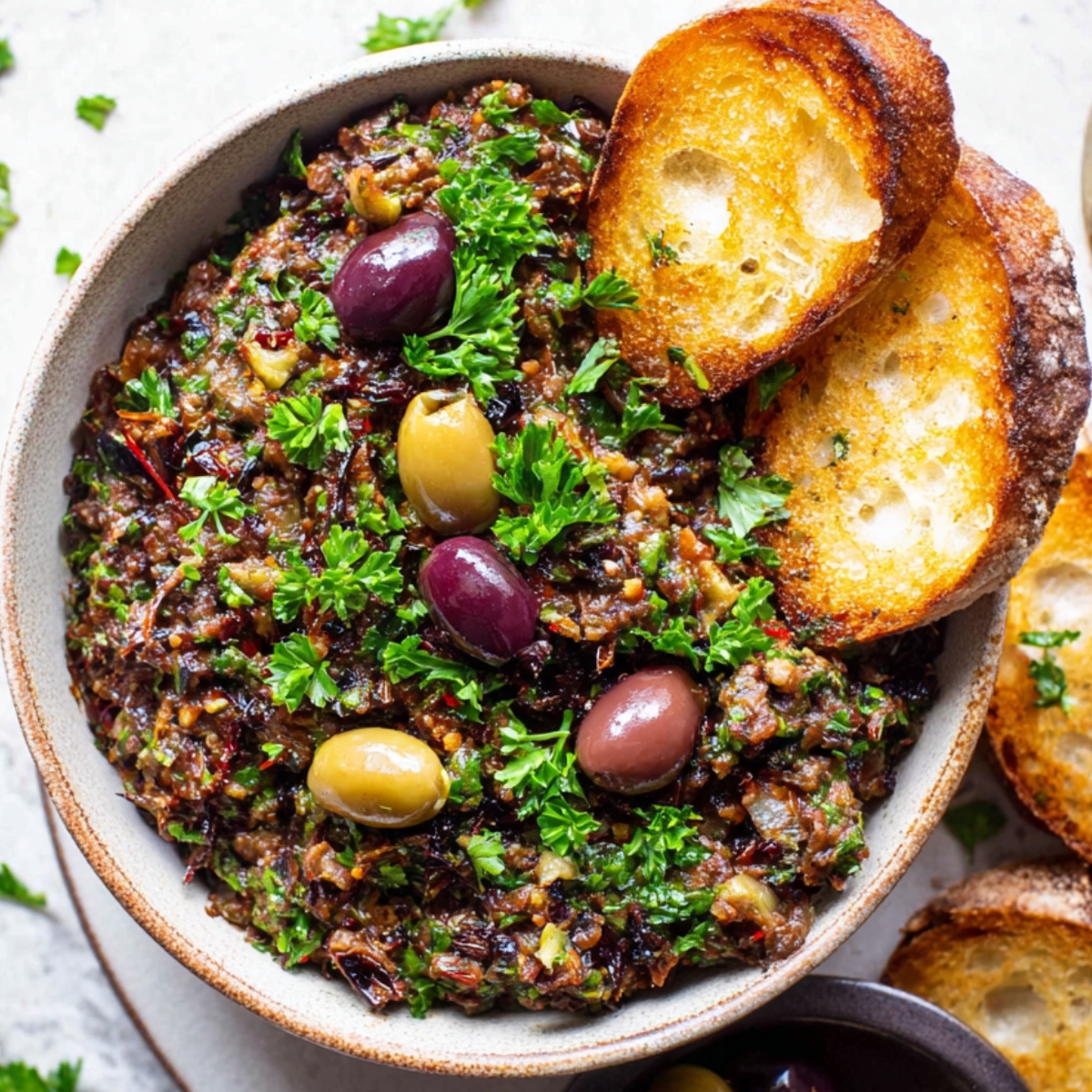
The whole thing happens in a food processor. No cooking, no waiting, just pulse and serve. If you need other fast options for unexpected guests, I also love making Easy Avocado Toast Recipe | Ready in 5 Minutes or setting out Cornbread Recipe: Easy 40-Minute Homemade Version with a simple spread like this.
Why You Will love this Tapenade Recipe
It's ridiculously fast. Ten minutes from start to finish, and most of that is just measuring and pulsing. No complicated techniques, no waiting around.
You can customize the texture. Want a chunky olive spread for crackers? Pulse it a few times. Prefer a smooth paste for sandwiches? Let the food processor do its thing for a minute. You're in control.
It keeps for two weeks. Make it ahead, store it in the fridge, and pull it out whenever you need a quick snack or appetizer. It actually tastes better after a day or two when the flavors have time to blend.
It works everywhere. Smear it on toast, dollop it on hummus, serve it with vegetables, spread it on sandwiches. This Mediterranean olive paste makes everything taste more interesting.
Jump to:
Tapenade Recipe Ingredients
Here's everything you need to make this Tapenade Recipe, briny spread.
See Recipe Card Below This Post For Ingredient Quantities
Mixed pitted olives: The base of the recipe. A mix of black, Kalamata, and green olives gives you the most complex flavor. Make sure they're drained well so your tapenade isn't watery.
Capers: Add a sharp, tangy bite that balances the richness of the olives. Drain them before adding.
Sun-dried tomatoes: Bring a touch of sweetness and depth. The marinated kind work best because they're already soft and flavorful.
Garlic: Gives the Tapenade Recipe its punchy, savory backbone. One tablespoon is bold but not overpowering.
Dried oregano: A classic Mediterranean herb that ties everything together. If you have fresh, you can use double the amount.
Fresh parsley: Brightens the whole mixture and adds a fresh, grassy note. Dried works in a pinch, but fresh is better here.
Fresh basil: Another layer of herbaceous flavor. It's subtle but makes a difference.
Lemon juice: Cuts through the saltiness and adds a zesty brightness. About half a lemon does the job.
Extra virgin olive oil: Helps everything blend smoothly and adds richness. Don't skip this or use a flavorless oil.
Black pepper: Just a few grinds to round out the flavors.
HOW TO MAKE Tapenade Recipe
Making this easy tapenade recipe is as simple as adding everything to the food processor and pressing a button.
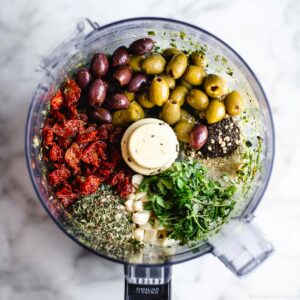
Add ingredients to food processor: Put the olives, capers, sun-dried tomatoes, garlic, oregano, parsley, basil, lemon juice, olive oil, and black pepper into the bowl of your food processor fitted with the S-blade.
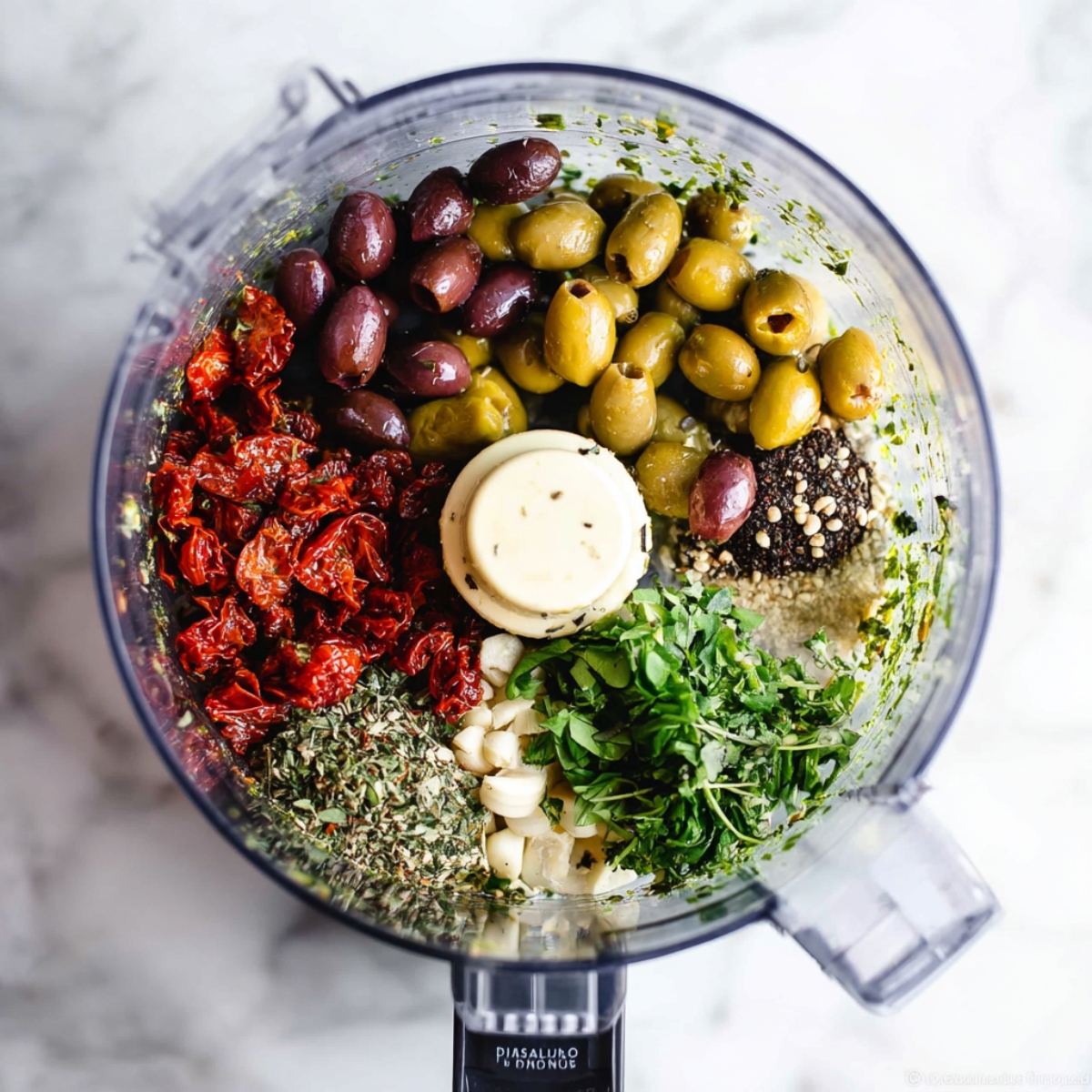
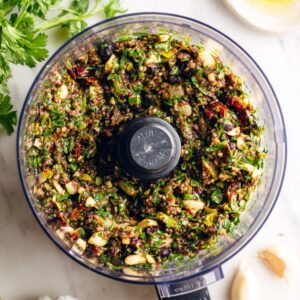
Pulse for relish texture: If you want a chunky olive relish, pulse a few times, scrape down the sides with a rubber spatula, then pulse a few more times until you reach the texture you like. The olives should be chopped but still have some texture.
Pulse for chunky spread: For a thicker, more spreadable consistency, pulse 15 to 17 times, stopping to scrape down the bowl a couple of times. You'll have small chunks of olive throughout.
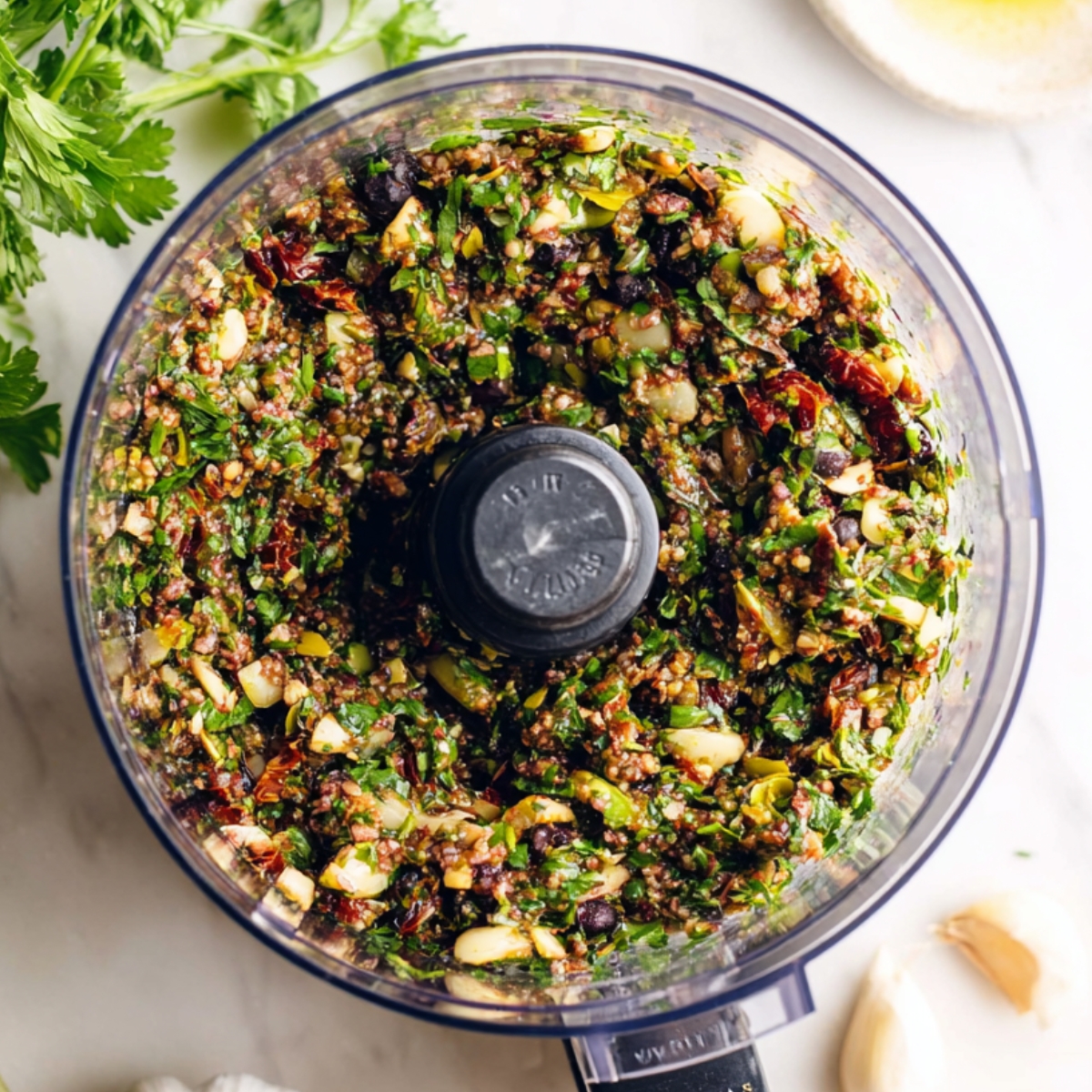
Process for smooth tapenade: If you prefer a smooth, creamy paste, let the food processor run for about a minute, scraping down the bowl as needed. The mixture will turn into a thick, spreadable paste.
Garnish and serve: Transfer to a serving bowl and top with a few fresh parsley leaves and a drizzle of olive oil if you want it to look extra pretty.
Store properly: Scoop any leftovers into a covered container and keep it in the refrigerator for up to two weeks. The flavor gets even better after a day.
Simple Swaps and Substitutions
Different olives: Use whatever you have. All black olives, all Kalamata, or all green olives work fine. The flavor will shift a bit, but it'll still be delicious.
No sun-dried tomatoes? Leave them out or swap in a tablespoon of tomato paste for a different kind of depth.
Fresh herbs: If you don't have fresh parsley or basil, use all dried. Just cut the amounts in half since dried herbs are more concentrated.
No capers: You can skip them, but they do add a nice tangy punch. A splash of pickle brine can give you a similar briny flavor.
Oil-free version: Use a little bit of the liquid from the olive jar or a splash of vegetable broth to help everything blend without adding more oil.
Expert Tips
Drain everything well. Excess liquid will make your Tapenade Recipe watery and bland. Pat the olives and sun-dried tomatoes dry with a paper towel if needed.
Taste and adjust. Once it's blended, taste it. Need more lemon? Add it. Want more garlic? Go for it. This recipe is flexible.
Don't over-process. If you want any texture at all, stop pulsing before you think you should. It's easy to blend it too smooth, but you can't un-blend it.
Let it rest. If you have time, let the finished Tapenade Recipe sit in the fridge for an hour or two before serving. The flavors deepen and meld together.
Equipment FOR Tapenade Recipe
You don't need much to make this food processor Tapenade Recipe.
Food processor with S-blade: This is the only real piece of equipment you need. A blender can work in a pinch, but a food processor gives you better control over the texture.
Rubber spatula: For scraping down the sides of the bowl so everything gets evenly chopped.
Measuring cups and spoons: To keep your ingredient ratios on track.
Storage YOUR Tapenade Recipe
This vegan tapenade keeps beautifully in the fridge.
Refrigerator: Store in an airtight container for up to two weeks. Press a piece of plastic wrap directly onto the surface before sealing to prevent browning.
Freezer: You can freeze tapenade in small portions for up to three months. Thaw it in the fridge overnight before serving. The texture might be slightly softer, but the flavor stays strong.
Make-ahead tip: This is one of those recipes that actually improves after sitting for a day. The garlic mellows out and all the flavors blend together beautifully.
Serving Suggestions
Here's how to serve this tapenade appetizer so everyone falls in love with it.
With crusty bread and crackers: The classic way. Toast some baguette slices or set out a variety of crackers and let people help themselves.
On crostini or bruschetta: Spread it on toasted baguette rounds and top with a little crumbled feta or a basil leaf for an elegant appetizer.
As a sandwich spread: Skip the mayo and use this instead. It's incredible on turkey sandwiches, grilled vegetables, or even a simple tomato and mozzarella panini.
With fresh vegetables: Serve it alongside cucumber slices, cherry tomatoes, bell pepper strips, or celery sticks for a lighter option. It also pairs beautifully with Easy Sweet Potato Hash Recipe | 5 Simple Ingredients for a brunch spread.
FAQ
What is a traditional tapenade made of?
Traditional Tapenade Recipe is a Provençal spread made from olives, capers, anchovies, garlic, and olive oil. This version skips the anchovies to keep it vegetarian and vegan-friendly, but you can always add a fillet or two if you want that classic salty depth. My grandma used to make hers with anchovies, and honestly, it's delicious either way.
How to make your own tapenade?
Making homemade Tapenade Recipe is incredibly simple. Just add olives, capers, garlic, herbs, lemon juice, and olive oil to a food processor and pulse until you reach your desired texture. You can make it chunky or smooth depending on what you like. The whole process takes about ten minutes, and you can adjust the flavors to suit your taste.
Does tapenade have to have capers?
No, capers aren't strictly required, but they do add a tangy, briny flavor that balances the richness of the olives. If you don't have capers or don't like them, you can leave them out or substitute a splash of pickle juice or a little extra lemon juice for acidity. My friend Jackeline always skips them because she's not a fan, and her tapenade still turns out great.
What's in an olive tapenade?
An olive Tapenade Recipe typically includes pitted olives, capers, garlic, olive oil, and lemon juice. Many recipes also add herbs like parsley and basil, and some include sun-dried tomatoes for extra flavor. The beauty of tapenade is that it's flexible, so you can adjust the ingredients based on what you have and what you like. The key is good olives and a bold, briny flavor.
Related
Looking for other recipes like this? Try these:



Pairing
These are my favorite dishes to serve with Tapenade Recipe



tapenade recipe
Ingredients
Method
- Place the olives, capers, sun-dried tomatoes, garlic, oregano, parsley, basil, lemon juice, olive oil, and black pepper into the bowl of a food processor.

- Pulse the mixture a few times, stopping to scrape down the sides, until a coarse relish texture forms.
- Continue pulsing up to about 15 times, scraping the bowl as needed, to create a chunky spread.
- Process longer until smooth if a more paste-like, spreadable consistency is preferred, scraping the bowl occasionally.
- Transfer to a serving dish and finish with a drizzle of olive oil and a sprinkle of fresh parsley if desired.
- Store the tapenade in a sealed container in the refrigerator for up to two weeks.




Leave a Reply